
News
Inside OzHarvest: Rescue, Deliver, Feed
Part three of three. The yellow vans, no warehouse in the middle, and what all three organisations add up to
21 October 2026

Part three of three
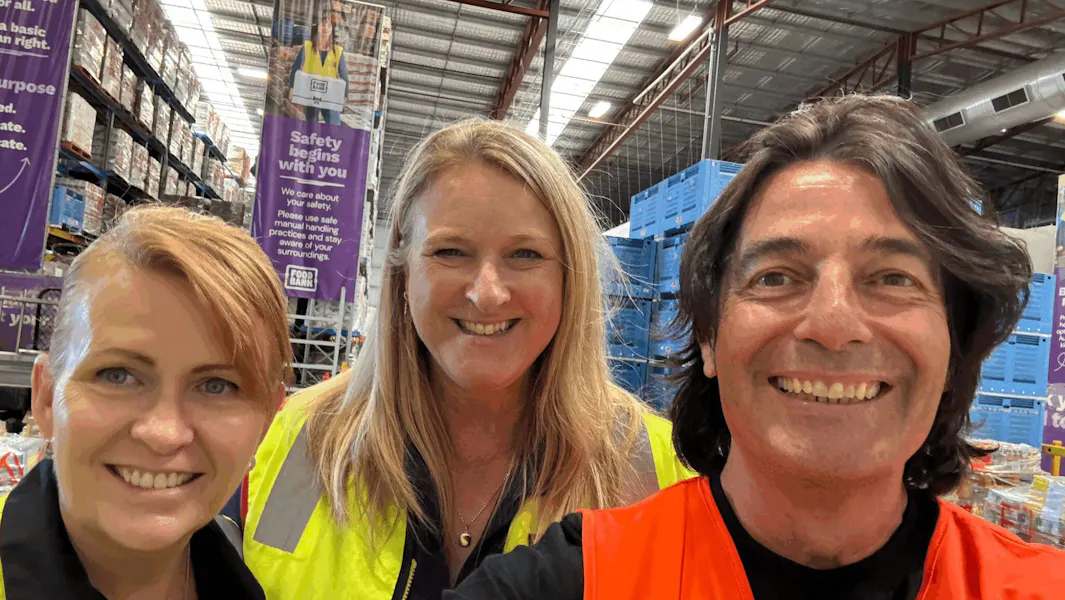
We visited SecondBite in January and Foodbank in February. OzHarvest completed the tour, and we spent time at their WA office with Neil Wyatt, Food Rescue Engagement Coordinator for WA, who walked us through how it comes together.
The figures below are the ones OzHarvest gave us at the time of that visit, so read them as a snapshot from early 2026 rather than today's.
Rescue, deliver, feed, with nothing in between
The yellow vans are the thing everyone recognises, and they turn out to be the whole model. OzHarvest collects quality surplus food from a large donor network, supermarkets, cafes, delis, hotels, airlines, restaurants and corporate kitchens, then delivers it direct and free to charities that feed people.
There's no warehousing step in the middle. Rescue, deliver, feed. That's a genuinely different design from SecondBite, which sorts and repacks at a facility before distributing, and from Foodbank, which holds bulk stock and supplies it on.
At the time of our visit the national figures were:
- Over 250 tonnes of food rescued every week.
- More than 1,500 charities supported nationally.
- Over 250 million meals delivered since 2004.
Not only a logistics operation
OzHarvest was founded by Ronni Kahn AO in 2004, and food rescue is only part of what it does. It runs national education programs, FEAST in schools and NEST for adults, and it leads advocacy on halving Australia's food waste by 2030.
That combination is worth noticing. Moving food today treats the symptom. Changing how a country thinks about food is the longer game, and running both at once is harder than running either.
Three organisations, three models
Having now seen all three, the differences are clearer than any summary suggested before we started:
- SecondBite collects surplus, sorts and repacks it, then distributes to local relief agencies. All free.
- Foodbank holds and supplies bulk food to the sector, and also runs branches and hubs where households shop directly, sometimes for a weight-based handling fee.
- OzHarvest rescues and delivers straight to charities, with no warehouse in between, and runs education and advocacy alongside.
Different models, same intent. None of them is doing the other's job, and the sector needs all three.
Where a surplus app fits
Foody Bag isn't a charity and doesn't pretend to be. It sells surplus food cheaply to people who'll pay a few dollars for it, which keeps food out of bins and puts money back to the shop. What these three do is get food to people who can't pay at all.
Visiting all three made the boundary clearer rather than blurrier. The common thread is that almost none of this is about goodwill running short. It's about trucks, cold storage and timing.
Our thanks to Lyndon, Kate, Kylea and Neil for the time and the insight.



Foody Bag's mission is to reduce food waste.
Made in Australia with love
Copyright 2026 - All rights reserved